
Use exit ticket results to identify what students can do independently, find the specific mistake blocking progress, and choose a focused response for the next lesson. Sort by the reasoning students show, not just their scores. Then check understanding again with a fresh task after teaching.
A stack of completed slips does not automatically tell you whether to move on. Some wrong answers reflect a misconception; others come from a calculation slip, unclear wording, or an unfinished response.
The useful decision is: what needs to change tomorrow, and for whom?
What should you look for before counting correct answers?
First check whether the question actually measured the lesson’s intended skill. Then inspect the method, explanation, or evidence in each response. A total score can show how many answers were correct, but it cannot always explain why students struggled or which teaching response would help them.
The Australian Education Research Organisation’s guidance on monitoring student progress connects checking understanding with identifying gaps and adjusting instruction. The sorting process below is a practical way to organize that decision, rather than a prescribed assessment system.
Before reviewing the class set, write down:
- The specific skill the ticket was meant to assess.
- What a successful response would contain.
- Other valid methods or answers you should accept.
If the responses are too vague to interpret, improve the prompt before drawing conclusions. Our exit ticket questions by lesson goal provide examples with expected answers.
How do you turn exit ticket responses into a lesson plan?
Review the work in two passes: first look for recurring patterns, then examine uncertain responses more closely. Group students temporarily by the support they need, select a teaching action for each pattern, and prepare a short follow-up task. Keep the process focused on the skill you assessed.
1. Identify the error, not just the incorrect answer
Consider this worked planning example:
Prompt: “A ribbon is 0.6 meters long. Another is 0.45 meters long. Which is longer? Explain your comparison.”
The intended evidence is that students compare decimal values using place value. A successful response might explain that 0.6 equals 0.60, which is greater than 0.45, or show the comparison accurately on a number line.
These illustrative responses would lead to different decisions:
| Student response | What the work suggests | A useful next action |
|---|---|---|
| “0.6, because 0.60 is greater than 0.45.” | Correct comparison with relevant reasoning | Offer a fresh application |
| “0.45, because 45 is bigger than 6.” | Whole-number reasoning applied to decimals | Model tenths and hundredths |
| “0.6, because fewer digits means bigger.” | Correct answer supported by an unreliable rule | Test that rule with a counterexample |
| “0.6” with no explanation | Correct choice; reasoning remains unclear | Ask for a brief explanation |
| Blank response | Insufficient evidence | Check what prevented a response |
These are constructed examples, not results from a classroom trial. Their value is in showing why a simple correct/incorrect split can miss important differences.
2. Sort by the next support needed
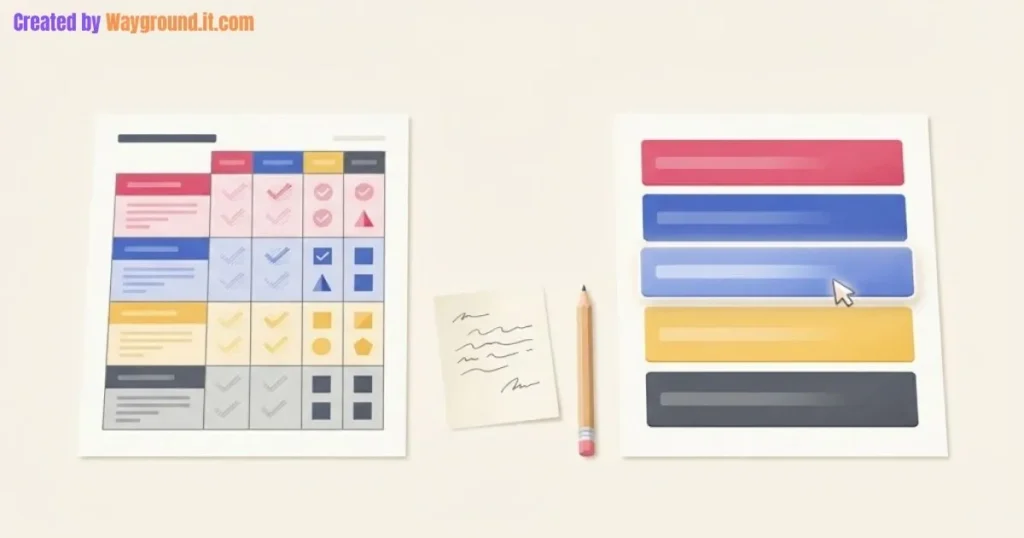
Use a few practical labels, such as “place-value model,” “check the rule,” “explanation needed,” and “ready to apply.” Write student names beside the relevant action in a private planning note.
Keep the labels temporary. A student who needs a decimal model today may show clear understanding on the next check.
Avoid making permanent ability groups from one short response. Also keep blank or incomplete tickets separate from confirmed misconceptions until you have more information.
3. Choose whole-class, small-group, or individual follow-up
Use a whole-class explanation when a misunderstanding is widespread or concerns a prerequisite that many students need. Use a targeted group when the same issue appears in a smaller set of responses. An individual check-in can resolve an isolated ambiguity without repeating the lesson for everyone.
For the decimal example, a shared belief that “45 is bigger than 6” calls for a place-value explanation. A student who simply omitted the written explanation may only need to explain the comparison aloud or add a sentence.
Do not choose the response using a fixed percentage alone. Consider the seriousness of the misunderstanding, the evidence available, and whether the next lesson depends on that skill.
4. Give students a specific task to complete
Replace “check your work” with an action tied to the error: “Write both measurements in hundredths, then compare them again.” That tells students where to direct their attention.
The Education Endowment Foundation’s teacher feedback guidance emphasizes feedback principles rather than assuming written or verbal delivery is always better. Choose the method that lets you explain the issue clearly and gives students a chance to respond.
A brief explanation followed by a correction task may be more useful than writing the same paragraph on every slip.
5. Recheck with a different item
After the follow-up, ask students to compare 0.7 and 0.68 and justify their answer. The numbers are new, but the place-value demand is similar.
To challenge the “fewer digits means bigger” rule, compare 0.4 and 0.65. The longer decimal is greater in this case, so the rule cannot decide the answer reliably.
A correct response immediately after modeling is encouraging, but it is not proof of lasting understanding. Revisit the skill later, particularly if students will need it in a new context.
What might the beginning of the next lesson look like?
Start with a short response to the most important pattern, then let students practice at the level of support their work suggests. You do not need to replace the entire lesson. Adjust the opening, a worked example, or the independent task when that is enough to address the gap.
For the decimal comparison example, a possible opening is:
- Show an anonymous incorrect explanation. Ask students what the comparison overlooks.
- Model one comparison visually. Connect tenths and hundredths using a place-value chart or number line.
- Assign a fresh comparison. Give each student a chance to respond independently.
- Follow up selectively. Meet students who still need the model while others explain a new pair of decimals.
Students who already understand the skill need meaningful work too. Ask them to create two decimals that could mislead someone comparing digits as whole numbers, then explain the correct order.
That extension deepens the same learning goal without requiring students to race through unrelated work.
How much information should you record?
Record enough to connect the response, teaching action, and follow-up evidence. A short private note can be sufficient; you do not need a new tracking system for every lesson. Focus on what you need to remember when planning, especially recurring misunderstandings or students who still need support.
You can copy this planning template:
Learning goal:
Evidence of understanding:
Main error pattern:
Students needing follow-up:
Teaching response:
Fresh check and next review point:
For digital collection, our Google Forms exit-ticket guide covers the setup. However you collect responses, inspect the actual work rather than relying only on an automatically calculated score.
What if the exit ticket results are unclear?
Gather a little more evidence before changing the lesson or assigning a support group. Unclear results can come from ambiguous questions, missing explanations, limited response time, or access barriers. A brief conversation or a better-matched task may tell you more than scoring the same incomplete response repeatedly.
If many students leave it blank: check whether they had enough time and understood the directions. Do not assume that every blank means the content was too difficult.
If students give different reasonable answers: review your question and success criteria. Accept defensible interpretations rather than forcing responses into an overly narrow answer key.
If an answer is correct but confidence is low: inspect the reasoning and offer another chance to apply it. A confidence rating provides context; it does not replace demonstrated performance.
If the same mistake returns: revisit your explanation, prerequisite knowledge, and the task’s demands. Repeating identical practice may not resolve the misunderstanding.
Choose one learning goal for your next review. Identify the main response pattern, plan one teaching adjustment, and prepare one fresh check. The result should be a clearer next step for students and a manageable decision for you.