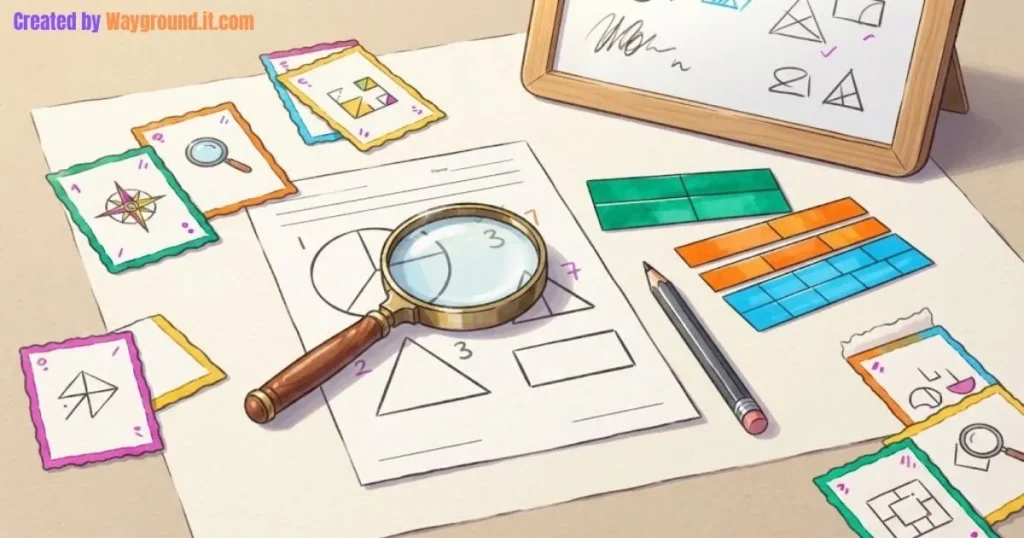

Math error analysis activities ask students to locate a mistake, explain why it is wrong, and repair the reasoning. Turn that process into a classroom game by awarding points for a justified correction, then finish with a new problem students solve independently.
The goal is more useful than spotting a wrong answer. You want to know whether students understand the mathematical idea behind the correction.
These six activities use paper, cards, or mini whiteboards. Each includes an original worked example and answer key, so you can choose one that matches content your class has already learned.
How do you make error analysis useful rather than confusing?
Start with a familiar skill, label deliberately incorrect work clearly, and give students a correct explanation before the activity ends. Ask everyone to attempt the analysis before discussing it. If students cannot yet explain a valid method, model that method before asking them to diagnose a faulty one.
The Institute of Education Sciences’ algebra teaching guide recommends using solved problems to examine mathematical reasoning. IES also describes how ByExample materials use marked correct and incorrect solutions, followed by students’ own problem solving.
The games below are original classroom adaptations, not tested versions of those interventions. Use them to make reasoning visible, and check what students can do afterward.
For a wider selection of formats, see our middle school math review games.
Which error analysis game fits your lesson?
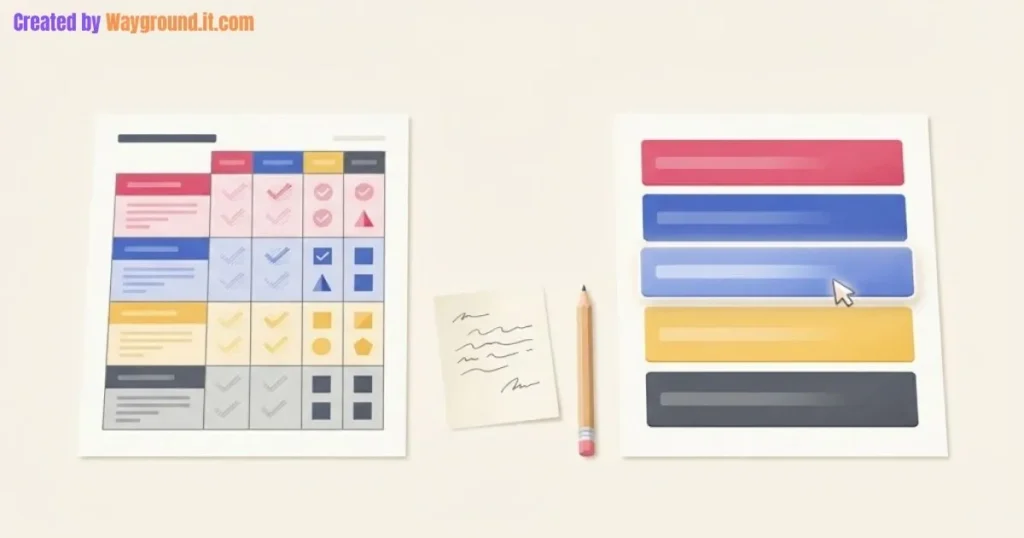
Choose the game by the misconception you want students to examine. A sequence of steps works well for locating the first invalid operation. A matching task helps distinguish different error types, while a counterexample challenges an unreliable rule. Keep the game mechanics simple enough that the mathematics remains central.
| Activity | Mathematical focus | Materials |
|---|---|---|
| First-error detective | Equivalent equations | Numbered solution steps |
| Convince the checker | Negative numbers and substitution | Mini whiteboards or paper |
| Match the mistake | Decimal and fraction reasoning | Solution cards and explanation cards |
| Estimate before you repair | Percent discounts | Two proposed answers |
| Label rescue | Area, perimeter, and units | Rectangle sketch and labels |
| Repair-and-test partners | Division by a fraction | Prompt cards and a fresh problem |
These are topic suggestions, not grade-level standards claims. Select examples according to your curriculum and students’ prior instruction.
How do you run the six activities?
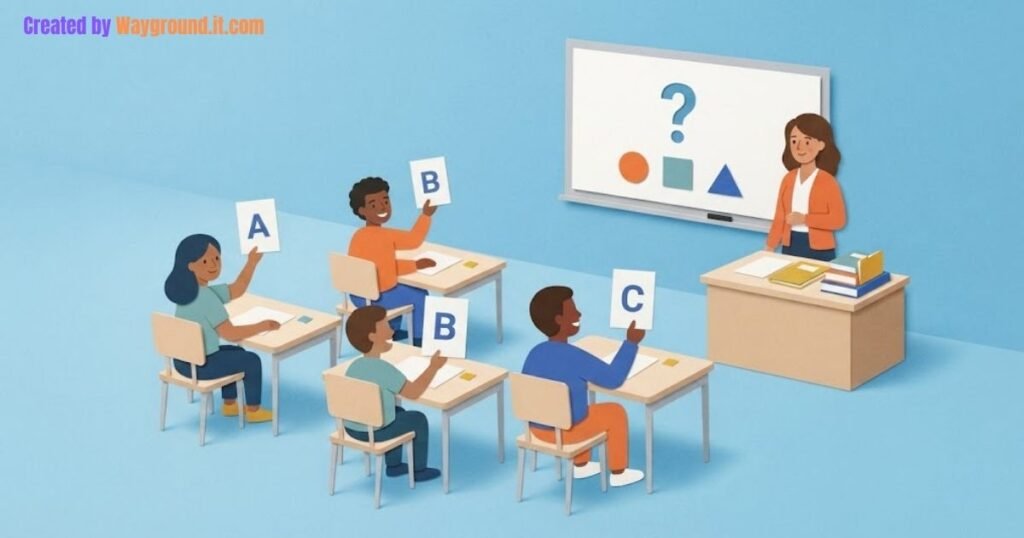
Use the same basic routine for each activity: students think independently, compare reasoning, and receive a teacher-confirmed explanation. Award a point for identifying the error and another for justifying the repair. Let students revise their work so the round ends with a correct method they can explain.
1. First-error detective
Display this deliberately incorrect solution:
- 4x + 7 = 23
- 4x = 23 + 7
- 4x = 30
- x = 7.5
How to play: Students privately circle the first invalid transition. Partners then agree on a correction and explain why it preserves equality.
Answer: The first error occurs between steps 1 and 2. Subtract 7 from both sides: 4x = 16, so x = 4.
Check by substitution: 4(4) + 7 = 23. The arithmetic after the incorrect transition is internally consistent, which is why finding only the final wrong answer is insufficient.
Fresh check: Solve 5x + 6 = 31 and explain the first operation. The answer is x = 5.
2. Convince the checker
Display this claim: “If n = −3, then 2n − 5 = 1, because 2 × 3 − 5 = 1.”
How to play: One partner acts as the checker and asks, “Where did the negative sign go?” The other writes a corrected substitution and explains it; then they exchange roles with a fresh example.
Answer: Substitute the entire signed value: 2(−3) − 5 = −6 − 5 = −11. The original work replaced −3 with +3.
Require both the corrected value and the substitution line before awarding the explanation point. A student who guesses −11 still needs to show where it comes from.
Fresh check: Evaluate 3n + 2 when n = −4. The answer is −10.
3. Match the mistake
Prepare these three incorrect solution cards:
- Card A: 0.8 + 0.35 = 0.43
- Card B: 2/5 + 1/5 = 3/10
- Card C: 3² = 6
Prepare matching explanations: “Added digit strings without preserving place value,” “Added denominators instead of keeping equal-sized parts,” and “Multiplied the base by the exponent.”
How to play: Students match each card to its explanation and supply a corrected answer. Ask each partner to explain a different match so one person cannot complete the whole round alone.
Answers: A is 1.15 because 0.8 is 0.80. B is 3/5 because both fractions count fifths. C is 9 because 3² means 3 × 3.
This set suits mixed review after all three skills have been taught. For a focused lesson, prepare three cards about the same concept instead.
Fresh check: Ask each student to correct one new example involving the error they explained.
4. Estimate before you repair
Display: “A $60 jacket is discounted by 25%. One solution gives a sale price of $35; another gives $45.”
How to play: Students first explain whether a quarter-off discount should leave more or less than half the original price. They then choose an answer and reconstruct a plausible error behind the other one.
Answer: A quarter of $60 is $15, so the sale price is $45. The $35 answer could come from subtracting 25 dollars instead of 25 percent; it does not prove that this was the solver’s actual method.
The estimate alone cannot settle the choice because both amounts exceed $30. Students still need the calculation and an explanation of what the percentage represents.
Fresh check: A $40 item is discounted by 15%. The discount is $6 and the sale price is $34.
5. Label rescue
Draw a rectangle measuring 7 cm by 4 cm. Attach two incorrect labels: “Area = 22 cm²” and “Perimeter = 28 cm.”
How to play: Pairs earn a shared point for repairing both labels and another for explaining the units. Have students trace the boundary and shade the interior as they explain.
Answer: Area is 7 × 4 = 28 cm². Perimeter is 7 + 4 + 7 + 4 = 22 cm.
The numbers have been assigned to the wrong quantities. An explanation should identify what each quantity measures rather than simply swap the labels.
Fresh check: For an 8 cm by 3 cm rectangle, area is 24 cm² and perimeter is 22 cm. Ask why the same perimeter does not require the same area.
6. Repair-and-test partners
Display this incorrect claim: “Three divided by one-half is 1.5, because dividing always makes a number smaller.”
How to play: Partners draw three wholes and divide each into halves. They count the half-sized groups, repair the claim, and explain their drawing to another pair.
Answer: 3 ÷ 1/2 = 6. The question asks how many halves fit into three wholes; there are six.
If students already know the reciprocal procedure, ask them to connect it to the drawing: 3 × 2 also counts the two halves in each whole.
Fresh check: How many quarter-cup portions can be made from two cups? There are eight, so 2 ÷ 1/4 = 8.
How do you keep the games supportive and check learning?
Use invented mistakes or carefully anonymized examples, focus discussion on the reasoning, and give students time to revise. Keep team scores separate from judgments about individual understanding. After the round, collect a fresh response from each student so you can see who can apply the repaired idea independently.
Avoid speed bonuses when your purpose is to hear explanations. Let students use diagrams, manipulatives, or oral explanations when appropriate to the learning goal and their established accommodations.
For partner work, rotate who explains and who checks. Our cooperative classroom games guide offers more ways to organize shared participation.
Collect the fresh check before displaying its answer. Look for whether the original error returns, whether the method is sound, or whether the response is too incomplete to interpret.
Choose one activity for the next skill your class reviews. End with the correct explanation visible and a new independent attempt. That gives the game a useful teaching purpose beyond the points earned.